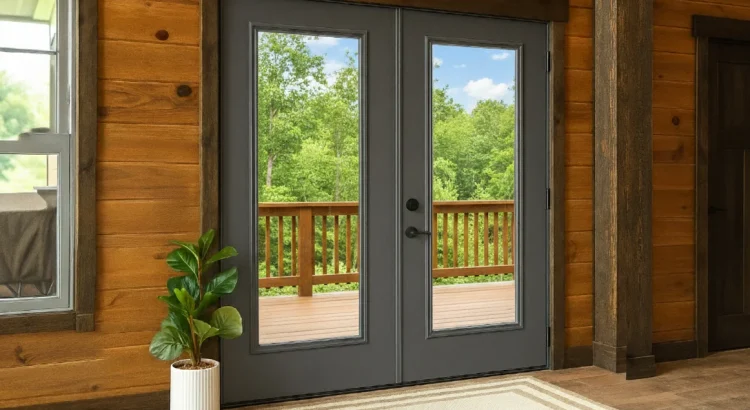
Nobody counts how many times they open the patio door.
Why would they?
Someone lets the dog out before breakfast. A child runs into the garden looking for a football. The washing goes outside. Somebody works from the patio table for an hour. The dog wants back in. Then out again. Then back in again because apparently dogs have no concept of making a decision.
By lunchtime, a door that might once have been opened twice on a summer Sunday has already completed a dozen journeys.
That change in how we use our homes is easy to overlook, but it matters. Modern patio and bifold doors are working considerably harder in some households than their predecessors ever did.
It is also why a door becoming sluggish doesn’t necessarily mean it needs replacing. Sometimes repairs to existing patio doors are dealing with the fairly predictable consequences of thousands upon thousands of opening cycles.
The door hasn’t mysteriously become unreliable.
It has been busy.
The back door isn’t really the back door anymore
Think about a typical house from 25 years ago.
The kitchen might have had a conventional external door and perhaps a separate set of sliding patio doors in the dining room. Those sliders were often treated almost as seasonal equipment.
Opened when it was sunny.
Mostly ignored between October and March.
The way houses are designed and lived in has changed.
Knocking kitchens and dining rooms together became popular. Then came rear extensions, open-plan family rooms and large glazed openings across entire elevations.
Bifolds and sliders stopped being secondary doors.
In many homes, they became the main connection between the house and garden.
That means substantially more use.
A family with young children might operate a patio door dozens of times on a warm Saturday. Add pets and it can become ridiculous.
Every journey puts another cycle through rollers, locks, handles and running gear.
One journey means nothing.
Twenty a day means 7,300 a year.
Keep that up for eight years and you’ve gone past 58,000 opening cycles.
Suddenly a worn roller doesn’t seem quite so surprising.
Dogs may be the patio door industry’s best customers
Pet ownership changes door use massively.
A dog doesn’t care that the bifolds cost several thousand pounds.
It wants to go outside.
Then it discovers it is raining and immediately wants to come back.
Then somebody walks past the garden.
Outside again.
Anyone who has worked in houses with dogs will recognise another issue too: the area immediately around the garden entrance tends to become much dirtier.
Wet paws bring in mud. Hair collects in corners. Tiny stones come back from gravelled areas. Soil and garden debris gradually find their way into the lower track.
Sliding systems are particularly vulnerable because the rollers travel through that environment constantly.
A clean running surface causes relatively little resistance.
Add grit and the situation changes.
Tiny pieces of hard debris can become trapped between the roller and track. Thousands of movements later, visible wear starts appearing.
It is slow damage.
Nobody hears one small stone enter the track and thinks, “Well, that’s the patio door finished.”
But repeated contamination does take its toll.
Garden rooms have changed things again
There is another relatively recent contributor to door traffic: working from home.
For some households, the garden is no longer purely recreational.
There may be an office at the bottom of it.
Suddenly somebody who previously left through the front door once in the morning is crossing the patio threshold repeatedly throughout the working day.
Coffee.
Lunch.
Phone charger.
Forgotten notebook.
Back to the office.
Rain starts.
Back inside.
The door is effectively part of the commute.
It’s a small lifestyle change with a surprisingly large effect on mechanical use.
Across parts of Wakefield and neighbouring towns, the combination of rear extensions and garden offices means large doors are being treated much more like everyday entrances than occasional patio openings.
That wasn’t necessarily how every older system was expected to be used.
Heavy glass doesn’t get lighter with age
One of the odd things about sliding doors is how little homeowners think about their weight.
A large glazed panel is heavy.
Really heavy.
When everything is working correctly, good running gear disguises that beautifully. You push the handle and the panel moves with surprisingly little effort.
That ease creates the impression that not much mechanical work is happening underneath.
There is.
The rollers are carrying that weight every single time the door moves.
As they wear, the difference can be gradual.
The door doesn’t usually go from effortless on Monday to impossible on Tuesday. It becomes fractionally heavier over months or years.
People compensate without noticing.
They push a little harder.
Then use two fingers less and a whole hand more.
Eventually they lean into it.
By the time someone says, “This door is getting ridiculous,” it may have been deteriorating for several years.
Children have a unique operating technique
Adults generally open doors by using handles.
Children regard this as optional.
They pull panels from odd positions. Push against the glass. Stop doors halfway. Attempt to close them while toys are lying across tracks.
This isn’t a criticism of children. That’s just what houses with children are like.
But it does mean family homes can be tougher environments for sliding and folding systems.
A bifold is designed to move in a particular way. If one panel is repeatedly pushed or pulled awkwardly, additional loads can end up passing through hinges and running gear.
Then there are scooters.
And footballs.
And stones.
The bottom track of a garden-facing door lives an eventful life.
One rough roller affects everything else
This is where wear becomes interesting.
A patio door isn’t a collection of completely independent components.
They affect one another.
Imagine a roller begins wearing unevenly.
The panel sits fractionally lower on one side.
That changes how the door meets the frame.
Now the locking points aren’t perfectly aligned.
The homeowner notices the handle feels stiffer and pulls harder.
Additional force goes through the mechanism.
Nothing breaks immediately.
Six months later, the locking gearbox is under considerably more strain than it should be.
This is why faults inside UPVC door mechanisms are not always best understood by looking only at the component that finally failed.
The broken part may be the victim.
Finding the original cause matters.
Otherwise the replacement component starts living exactly the same difficult life as the old one.
Summer is when the mileage really piles up
A British patio door can spend January doing almost nothing and August working overtime.
That uneven use matters.
During warm spells, doors may remain open for hours and be moved repeatedly from morning until night. Garden entertaining adds another layer. People carry food outside, bring plates back, fetch drinks, chase children and move furniture around.
The threshold gets dirtier at exactly the same time that door usage increases.
Dry summer weather creates dust and grit.
Wet summer weather brings mud.
Yorkshire can provide both before lunch.
Then autumn arrives and homeowners sometimes notice the door no longer feels quite as smooth as it did in spring.
It gets blamed on colder weather.
Sometimes the damage was actually accumulated during summer.
Bifolds have even more going on
Sliding doors generally have a relatively simple movement.
Bifolds are different.
Multiple panels have to fold, travel and remain correctly aligned with one another. Hinges, rollers, guides and locking components are all involved.
A large set used repeatedly as the main garden entrance accumulates mechanical wear across several points simultaneously.
People often use the lead door separately where the design allows it, which can mean that particular panel gets vastly more use than the rest of the system.
Its hinges wear first.
Its lock works hardest.
Its alignment becomes the first to drift.
Then one day the homeowner opens the full bifold set and wonders why the panels don’t fold together as cleanly as they remember.
Again, nothing necessarily happened suddenly.
One part simply did most of the work for years.
We don’t service doors like other mechanical things
This is probably the strangest part.
A household might service its boiler every year.
Cars get oil changes, tyres, brakes and inspections.
People clean gutters because they understand that water and debris eventually create problems.
Doors?
Mostly ignored until they stop working.
Perhaps that’s because they look like part of the building rather than machinery.
But a large sliding patio door is absolutely a mechanical system.
So is a bifold.
There are moving components supporting considerable weight, repeatedly operating in an exposed environment.
The fact they often survive years with almost no attention is arguably more impressive than the fact they eventually need repairing.
Listen to the door before looking at it
Sound can reveal deterioration surprisingly early.
A healthy sliding door should generally move without grinding or scraping.
A slight rumbling noise can indicate roller wear or contamination. Metallic scraping deserves attention. Clicking at a particular point in travel can suggest damage or debris somewhere along the track.
Bifolds give their own clues.
Hinges may creak.
One panel might make contact with another.
A locking point can click against its keep instead of entering cleanly.
These aren’t sophisticated diagnostic methods.
They’re simply changes from how the door used to behave.
That’s the useful comparison.
Not whether somebody else’s patio door is quieter.
Was yours quieter six months ago?
The worst habit is learning to live with it
People are remarkably adaptable.
Give someone a stiff patio door and within a few weeks they’ll develop a technique.
Pull slightly towards yourself first.
Lift the handle.
Push with your hip.
Then slide.
Visitors can’t operate it, but the homeowner can.
That’s usually not a sign that everything is fine.
The door has effectively trained the household to compensate for a fault.
The same happens with locks.
“We’ve always had to pull it towards us before lifting the handle.”
Maybe.
But if that wasn’t necessary when the door was installed, something changed.
Continually compensating can increase wear elsewhere because components are being forced together rather than meeting naturally.
A repair doesn’t necessarily mean a major job
The fear of cost probably explains why some people leave problems alone.
If an expensive glazed door starts playing up, the immediate assumption can be that an expensive replacement is coming.
That isn’t automatically the case.
A structurally sound door may simply have worn running gear or need proper realignment. Locks and mechanisms can fail independently of the frame and glazing.
Older systems can complicate things because compatible components sometimes become difficult to source, but age alone isn’t a reason to throw a door away.
There are some remarkably old sliders still operating across West Yorkshire.
Not beautifully, perhaps.
But repairable.
And homeowners are increasingly interested in keeping them going rather than replacing entire glazed openings unnecessarily.
Given current household budgets, that isn’t particularly surprising.
High use isn’t bad use
None of this means people should start rationing trips into the garden.
Doors exist to be used.
A family shouldn’t need a tally chart next to the kitchen because everyone is worried about wearing out the patio slider.
The point is simply that usage explains wear.
A door serving a retired couple who open it occasionally during summer has a very different life from an identical model in a house with four children, two dogs and a garden office.
Age tells only part of the story.
Installation quality matters.
Hardware quality matters.
Weather exposure matters.
Maintenance matters.
But workload matters too.
Quite a lot.
The first warning is usually effort
Ignore age for a moment.
The most useful question about a patio door is often simpler:
Is it harder to operate than it used to be?
If the answer is yes, something has changed.
It may only need adjustment.
There might be debris in the track.
A roller could be wearing.
The panel may have dropped slightly.
A locking component might be creating resistance.
Whatever the cause, increased effort is information.
A door that once moved easily shouldn’t gradually require brute force as a normal consequence of getting older.
This is especially relevant to heavily used doors because owners often don’t notice gradual deterioration. They interact with the system every day, so they unconsciously adjust alongside it.
Someone visiting the house notices immediately.
“Why is your door so heavy?”
Oh.
You forget it wasn’t always like that.
There are probably more 20-times-a-day doors than ever
The modern garden has become another room of the house.
People eat outside more. Children move constantly between indoors and outdoors. Pets dictate their own door-opening schedules. Garden offices have become normal. Extensions deliberately blur the boundary between kitchen and patio.
That lifestyle was exactly what large bifolds and sliders were installed to support.
And they do it brilliantly.
But it means the humble patio door isn’t particularly humble anymore.
For some households, it is one of the hardest-working mechanical systems in the property.
Thousands of movements a year. Heavy glass. Yorkshire rain. Summer dust. Muddy paws. Children. Gravel. Temperature changes.
After all that, a worn roller at year ten doesn’t feel much like premature failure.
It feels like mileage.